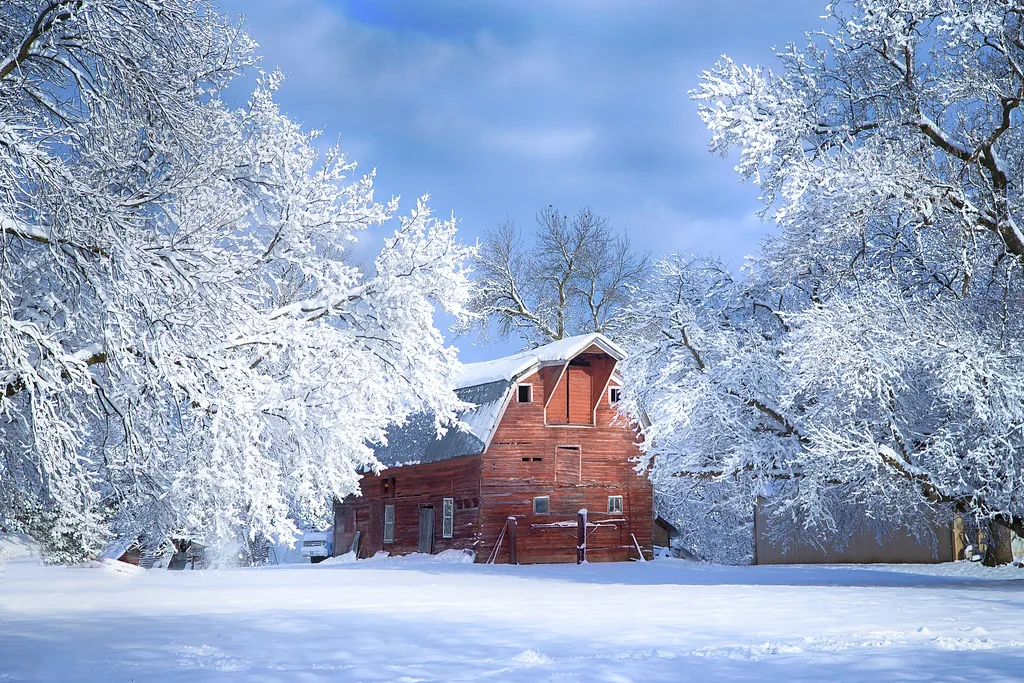
- Snow load
- Wind damage
- Hail
- Frozen pipes
- Barn and outbuilding damage
- February 2019Heavy snow after the polar vortex that led to numerous roof and barn collapses in western Wisconsin
- Late January 2019Polar vortex cold that caused frozen pipes across the state
- July 2019Severe storms and downbursts that damaged trees and buildings in parts of northern and western Wisconsin
Where two rivers meet
Eau Claire grew up where the Chippewa and Eau Claire rivers come together, and the city still centers on the water. Older neighborhoods like the Third Ward, Randall Park and Eastside Hill have early 1900s homes with plaster walls and wood trim. Postwar ranches fill much of the north and west sides, student rentals cluster near the university, and Altoona and Lake Hallie have newer subdivisions. Most of the city is in Eau Claire County, with a portion in Chippewa County.
Outside the city, farms, barns and pole buildings are a big part of the landscape, along with lake homes around Lake Wissota. Many rural properties carry farm policies with separate schedules for each building, and older dairy barns with stone foundations and timber frames can be difficult to price with tools built for suburban homes. Getting the building description right at the start often decides how fair the final number will be.
Weather in the Chippewa Valley
Western Wisconsin winters can be severe. After the late January 2019 polar vortex, February 2019 brought heavy snow, and western Wisconsin saw numerous roof and barn collapses. In July 2019, severe storms and downbursts damaged trees and buildings in parts of northern and western Wisconsin. Hail and straight-line wind are regular summer threats.
Common disputes on Eau Claire claims
Snow load and collapse
Carriers sometimes argue that a collapse was caused by age or poor construction rather than snow weight. Our snow load and roof collapse appraisal page explains how we document these losses.
Barns and outbuildings
Older barns and pole buildings are often hard to value, and replacement cost and actual cash value disputes are common. See our farm, barn and outbuilding appraisal services.
Wind and tree damage
Summer storms can drop trees on homes and garages. Scope disagreements often involve tree removal, framing repair and interior damage.
Rental properties
Student rentals near campus may involve multiple units, loss of rent and tenant contents, which can complicate claims.
How appraisal can help
Appraisal settles the amount of a covered loss when you and your carrier disagree on the number. Each side names an appraiser, and an umpire resolves anything they cannot agree on. We are independent appraisers, not attorneys or public adjusters.
We inspect on site, including rural properties, and prepare detailed estimates. As an illustrative example, a carrier might offer $20,000 for a collapsed pole building based on depreciated value, while a scope reflecting current materials and labor could be higher. Results depend on your policy and property.
Read our appraisal process guide to learn more, or have us do a carrier estimate review.
Areas we serve
We work in Eau Claire, Altoona, Chippewa Falls, Lake Hallie, Fall Creek and the surrounding countryside. We also serve La Crosse and Wausau. Contact us to talk through your claim.
Appraisal services in Eau Claire
Every Wisconsin Insurance Appraiser service is available to property owners in Eau Claire and the rest of Eau Claire County, including:
- Appraisal Demand Representation
- Home Insurance Appraisal
- Commercial & HOA Appraisal
- Hail & Roof Damage Appraisal
- Tornado & Straight-Line Wind Appraisal
- Snow Load & Roof Collapse Appraisal
- Water & Sewer Backup Appraisal
- Fire & Smoke Damage Appraisal
Eau Claire claim questions
My barn near Eau Claire collapsed under snow. Is that covered?
Many farm and homeowners policies cover collapse from the weight of snow or ice, but terms vary. If coverage is accepted and the amount is in dispute, appraisal can settle the value.
Do you inspect rural properties outside Eau Claire?
Yes. We inspect on site throughout the Chippewa Valley, including farms, outbuildings and lake properties.